Scenario: Humanoid Robots in Supermarket Restocking
A modelled scenario: humanoid robots restocking shelves and scanning inventory across four pilot stores of a European supermarket chain.
Motion1 Inc. ·
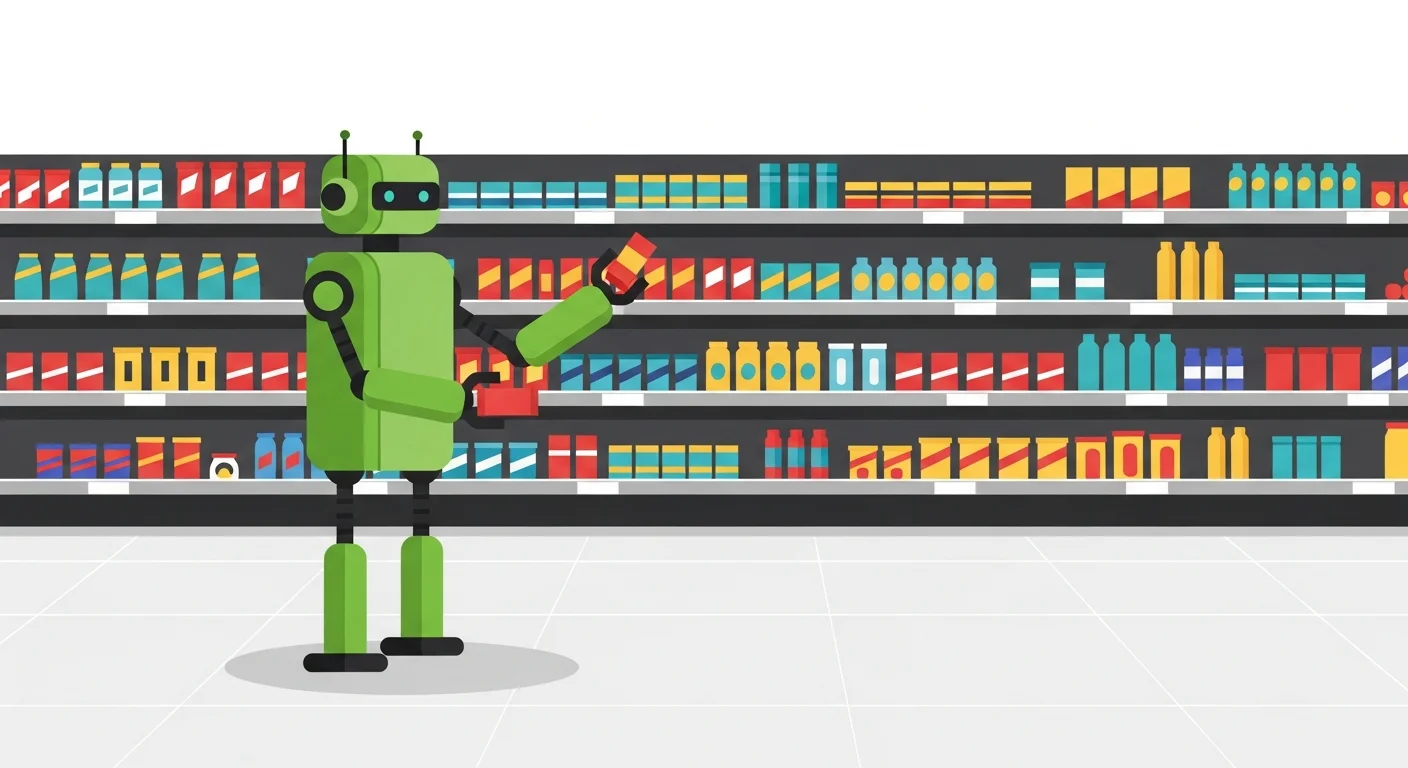
Supermarket Chain - Shelf Restocking and Inventory Scanning
A modelled scenario: this article describes a representative deployment, built from operational patterns typical of the sector, rather than a report on a named customer engagement. The figures are illustrative estimates of what a deployment of this shape can achieve.
The Challenge
A European supermarket chain operating over 120 stores faced a persistent operational problem: keeping shelves stocked during trading hours. Restocking typically happens in two windows - early morning before the store opens and during a mid-afternoon lull. But customer traffic patterns have shifted, and many stores now see consistent footfall throughout the day, leaving little time for uninterrupted restocking.
The result was visible gaps on shelves during peak shopping hours, directly impacting sales. Internal analysis estimated that out-of-stock shelf positions cost the chain between 3% and 5% of potential daily revenue per store. Manual inventory scanning - walking the aisles with a handheld scanner to identify gaps - was time-consuming and inconsistent.
The Solution
The chain piloted humanoid robots in four stores, deploying two robots per store. The robots performed two primary functions:
- Shelf restocking. Robots transport product cases from the backroom to the shop floor and place individual items on designated shelf positions. Restocking priorities are determined by real-time inventory data from the store's management system.
- Inventory scanning. Robots perform scheduled aisle scans, using vision systems to identify empty shelf positions, misplaced items, and pricing discrepancies. Scan results are fed directly into the store's inventory management platform.
The fleet management platform allowed regional managers to monitor robot operations across all four pilot stores from a centralised dashboard. Workflows were standardised across stores, with minor adjustments for layout differences.
Deployment Timeline
- Month 1-3: Detailed store mapping and navigation testing in one pilot store. Robot pathways were defined to avoid customer congestion areas. Safety protocols were established for robot-customer interaction (the robots yield to customers and maintain minimum clearance distances).
- Month 4: Two robots deployed in the first pilot store. Initial operation was limited to early morning restocking before store opening.
- Month 5-6: Robots began operating during trading hours. Customer interaction protocols were refined based on initial feedback.
- Month 7-9: Rolled out to three additional stores. Workflow templates from the first store were reused, reducing setup time by approximately 60%.
Modelled Results (First 9 Months Across Four Stores)
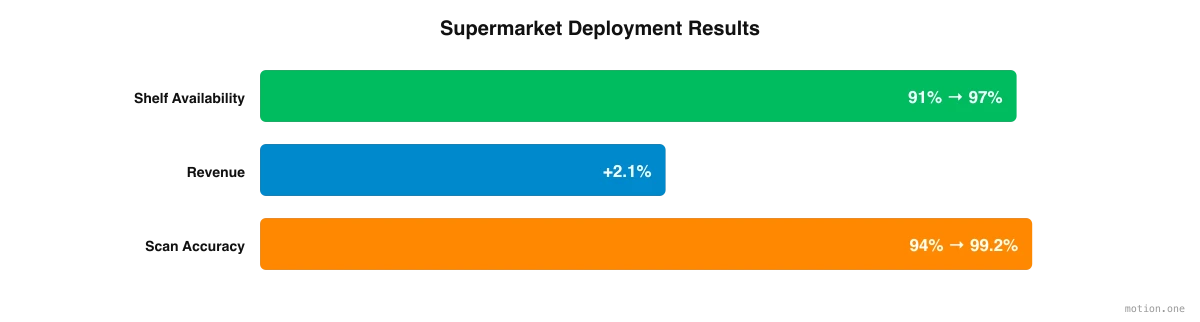
- Shelf availability: Average shelf availability during trading hours improved from 91% to 97%.
- Revenue impact: Estimated revenue uplift of 2.1% per store attributable to improved shelf availability.
- Inventory accuracy: Inventory scan accuracy reached 99.2%, compared to 94% with manual scanning.
- Scan frequency: Robots completed full-store inventory scans three times daily, compared to the previous once-daily manual scan.
- Labour reallocation: Store staff previously assigned to restocking were moved to customer service and fresh food preparation - areas where the chain was understaffed.
- Customer feedback: Initial surveys showed 78% of customers were neutral or positive about the robot presence. Negative feedback primarily related to aisle congestion during restocking, which was addressed by adjusting restocking schedules.
Key Takeaways
For retailers considering humanoid robot deployment, this pilot offers several practical lessons:
- Start where the constraint is time, not headcount. Restocking windows had been squeezed out by all-day footfall. The robots were justified by shelf availability during trading hours, not by taking people off the shop floor.
- Invest in the software layer. The fleet management platform mattered as much as the hardware. Reusing workflow templates from the first pilot store cut setup time in the next three by roughly 60%, and gave regional managers one dashboard across all four.
- Plan for a 3-6 month ramp-up. The first store took three months of mapping and navigation testing before a robot moved a single case. Budget time and patience accordingly.
- Measure what matters. Shelf availability and revenue uplift were the headline numbers, but scan accuracy, scan frequency, and customer sentiment told the fuller story. The full value of the deployment extends well beyond the till.
- Engage customers as well as staff. In a store, the public shares the floor with the robot. Survey feedback drove concrete changes here, including restocking schedules adjusted to reduce aisle congestion, while store staff moved into customer service and fresh food preparation.
This chain's pilot shows that humanoid robot deployment in retail is practical, beneficial, and achievable with current technology. The key is treating it as a store operations change rather than a technology purchase, planned around trading hours, customer comfort, and the templates that make store number two faster than store number one.