Von CapEx zu OpEx: Wie Leasing und eingebettete Finanzierung die Einführung von Humanoiden ermöglichen.
Kosten sind die größte Hürde für die Automatisierung. Die Umstellung humanoider Roboter von einer großen Anfangsinvestition auf planbare monatliche Betriebsausgaben – durch Leasing oder Buy-now-pay-later, direkt am Verkaufsort integriert – verändert die Kaufentscheidung und erschließt die Automatisierung den Unternehmen, die sie am dringendsten benötigen.
Motion1 Inc. ·
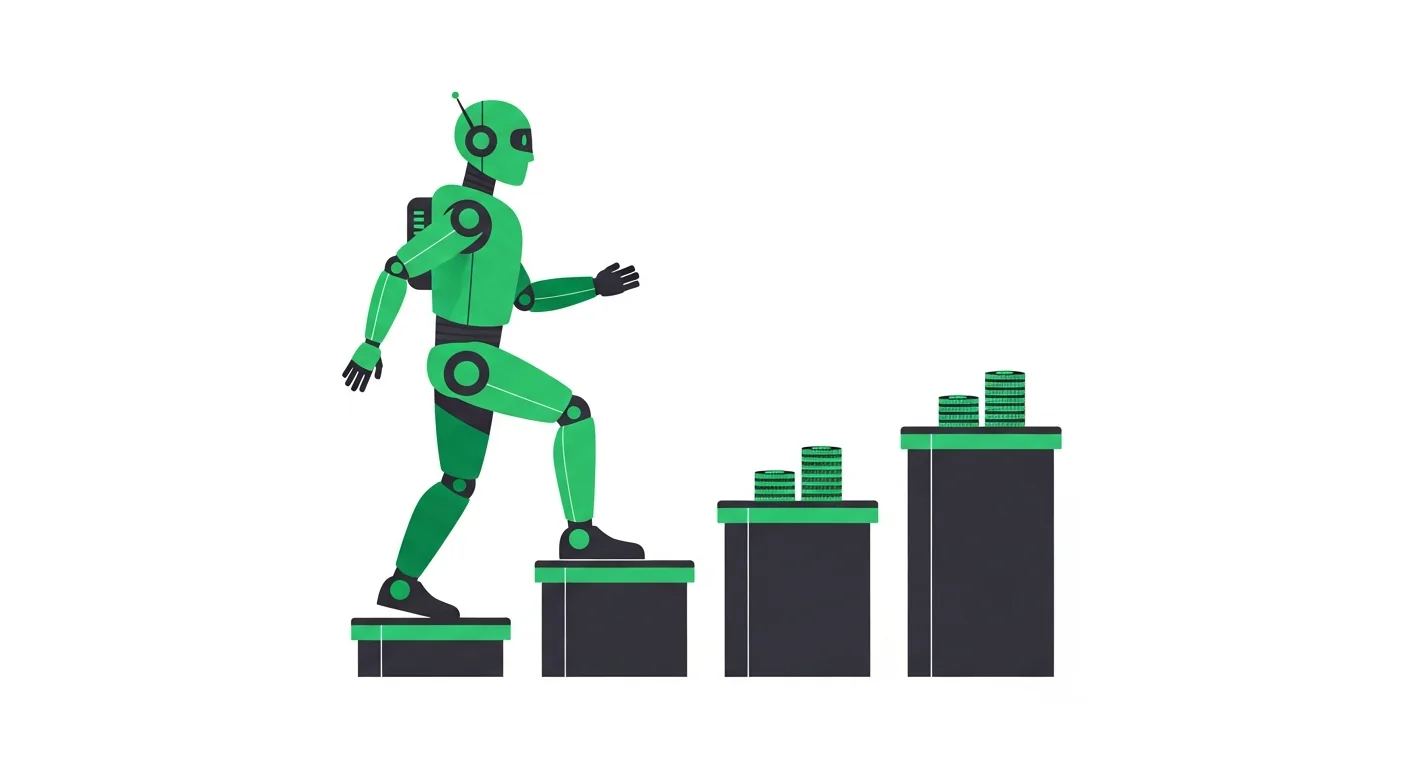
Die meisten Automatisierungsgeschäfte scheitern nicht an der Technologie. Sie scheitern an der Rechnung.
Ein Unternehmen sieht einen humanoiden Roboter, der eine langweilige, repetitive oder schwer zu besetzende Aufgabe übernehmen könnte. Das Team ist überzeugt. Dann erscheint der Preis, und das Gespräch verstummt. Nicht weil der Roboter es nicht wert wäre, sondern weil das Geld auf einmal das Bankkonto verlassen muss, bevor auch nur eine Stunde Arbeit geleistet wurde.
Dies ist die Preisschild-Mauer. Und für die meisten kleinen und mittleren Unternehmen ist es der Ort, an dem Automatisierungsprojekte still und leise sterben.
Kosten sind die größte Barriere
Dies ist keine Vermutung. In einer Branchenumfrage von 2025 nannten 54 % der Betreiber die Kosten als ihr größtes Hindernis für die Automatisierung – noch vor technischer Komplexität, Integration und Personalfragen. Mehr als die Hälfte der Unternehmen, die von Automatisierung profitieren könnten, werden davon abgehalten, wie sie bezahlt wird, nicht ob sie funktioniert.
Die Zahlen erklären, warum. Eine einzelne Roboterzelle oder humanoide Einheit der Einstiegsklasse kann im Voraus grob 150.000 bis über 1.000.000 Euro kosten. Sobald Sie eine komplette Linie integrieren, kann die Zahl allein über 1.000.000 Euro steigen. Für ein Großunternehmen ist das ein Posten. Für ein europäisches KMU ist es eine ernsthafte Belastung der Bilanz, Barmittel, die für Einstellungen, Lagerbestände oder einfach nur zur Aufrechterhaltung der Liquidität in einem schwachen Quartal hätten verwendet werden können.
Also rechnet das Unternehmen nach, sieht die anfängliche Zahl und geht weg. Der Roboter war nie das Problem. Die Zahlungsstruktur war es.
CapEx vs OpEx: Warum monatliche Zahlungen die Entscheidung ändern
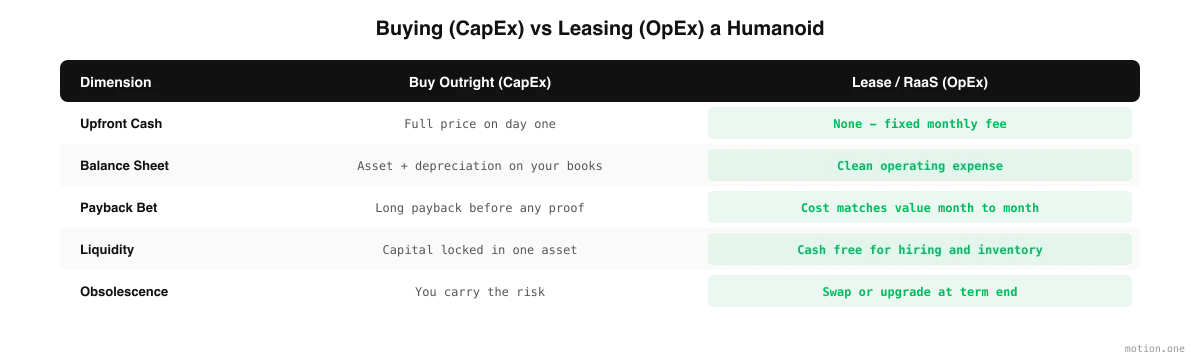
Wenn Sie einen Roboter direkt kaufen, ist es eine Investitionsausgabe (CapEx) – ein großer, einmaliger Kauf, der als Vermögenswert in der Bilanz steht und über Jahre hinweg Barmittel bindet. Um dies zu rechtfertigen, muss ein Unternehmen von einer langen Amortisationszeit überzeugt sein, bevor es den Roboter überhaupt bei der Arbeit gesehen hat. Das ist eine schwierige Wette, und viele Entscheidungsträger sind nicht bereit, sie einzugehen.
Leasing oder Robot-as-a-Service (RaaS) stellt die gesamte Entscheidung neu dar. Anstelle einer großen Kapitalausgabe zahlt das Unternehmen eine vorhersehbare monatliche Betriebsausgabe (OpEx). Der Roboter wird auf die gleiche Weise finanziert, wie Sie Strom, Software oder ein geleastes Fahrzeug finanzieren: Sie zahlen dafür, während Sie ihn nutzen, und die Kosten stimmen mit dem Wert überein, den er Monat für Monat produziert.
Diese Verschiebung bewirkt drei Dinge auf einmal:
- Sie beseitigt die anfängliche Barriere, sodass das Geschäft nicht mehr durch verfügbare Barmittel blockiert wird.
- Sie gleicht Kosten und Wert ab, da der Roboter seinen Unterhalt verdient, während er bezahlt wird.
- Sie schützt die Bilanz und lässt Kapital für den Rest des Unternehmens frei.
Der Roboter hat sich nicht geändert. Die Entscheidung schon. Eine 500.000-Euro-Frage wird zu einer überschaubaren monatlichen, und die Automatisierung öffnet sich plötzlich für Unternehmen, die zuvor preislich ausgeschlossen waren.
Zwei Zahlungswege
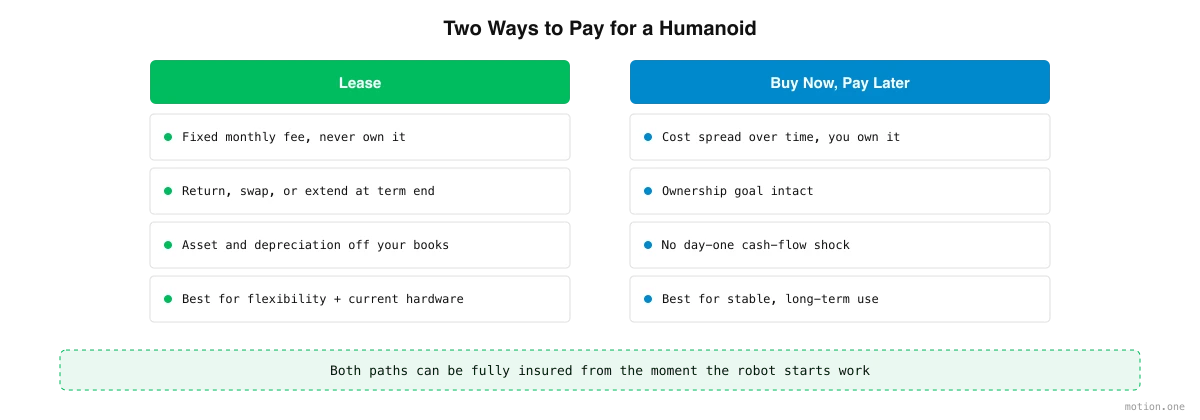
Es gibt nicht den einen richtigen Weg, einen Roboter zu finanzieren. Verschiedene Unternehmen wünschen sich unterschiedliche Dinge, manche wollen die Hardware nie besitzen, andere wollen sie besitzen, aber die Kosten verteilen. Beide Wege verwandeln eine Mauer in eine monatliche Position, und beide können vollständig versichert werden.
Leasing
Bei einem Leasingvertrag zahlt das Unternehmen jeden Monat einen festen Betrag und erwirbt niemals Eigentum. Am Ende der Laufzeit kann es den Roboter zurückgeben, gegen ein neueres Modell tauschen oder den Vertrag verlängern.
Dies passt zu Unternehmen, die maximale Flexibilität und minimale Verpflichtung wünschen. Humanoide Hardware und Software verbessern sich schnell, und ein Leasingvertrag bedeutet, dass Sie nie mit einer veralteten Einheit festsitzen. Es hält auch den Vermögenswert und seine Abschreibung vollständig aus Ihren Büchern heraus. Sie kaufen die Arbeit, die der Roboter leistet, nicht den Roboter selbst.
Jetzt kaufen, später bezahlen
Mit Buy-now-pay-later (Jetzt kaufen, später bezahlen) erwirbt das Unternehmen letztendlich den Roboter, aber die Kosten werden über die Zeit verteilt, anstatt auf einmal bezahlt zu werden. Die anfängliche Mauer verschwindet, während das langfristige Ziel des Eigentums intakt bleibt.
Dies passt zu Unternehmen mit einer stabilen, langfristigen Nutzung des Roboters, die den Vermögenswert letztendlich in ihren Büchern haben möchten, ohne den Liquiditätsschock der Bezahlung am ersten Tag.
In beiden Fällen kann eine Versicherung eingeschlossen werden, sodass der Roboter ab dem Moment, in dem er die Arbeit aufnimmt, gegen Schäden, Ausfälle und Haftung abgesichert ist. Die Preisgestaltung dieses Schutzes für Maschinen mit geringer Betriebsgeschichte ist eine eigene Herausforderung – wir behandeln sie in Humanoide versichern.
Warum es in den Vertriebsfluss gehört
Zu wissen, dass Finanzierung existiert, ist nicht dasselbe, wie sie einfach nutzen zu können. Wenn ein Käufer den Kauf unterbrechen, eine Bank oder Leasinggesellschaft suchen, einen separaten Antrag ausfüllen und Tage oder Wochen auf eine Entscheidung warten muss, ist der Schwung dahin. Viele Geschäfte sterben in dieser Lücke, nicht durch Ablehnung, sondern durch Verzögerung.
Eingebettete Finanzierung schließt diese Lücke. Die Leasing- oder Pay-later-Option erscheint innerhalb des eigenen Vertriebsflusses des Partners – des OEM, der den Roboter baut, oder des Implementierers oder Integrators, der ihn installiert. Der Käufer sieht einen monatlichen Preis neben dem Roboter, prüft die Berechtigung sofort und erhält eine schnelle Entscheidung, ohne das Gespräch jemals verlassen zu müssen. Die Entscheidung zur Automatisierung und die Entscheidung zur Finanzierung werden zu einem Schritt statt zu zwei.
Hinter den Kulissen trägt ein Finanzierungspartner die Last. Sie halten das Kapital, übernehmen das Risiko, kümmern sich um die Compliance und verwalten Ansprüche, wenn etwas schiefgeht. Der OEM oder Implementierer nimmt den Roboter nicht in die eigene Bilanz auf oder wird zum Kreditgeber, er bietet einfach eine bessere Zahlungsweise an und überlässt den Rest einem Spezialisten. Die Finanzierung von Humanoiden ist wirklich schwierig, und genau deshalb sollte sie nicht beim Verkäufer landen; wir erläutern dies in Warum Roboter schwer zu finanzieren sind.
Die Vorteile wirken in beide Richtungen. Für den OEM oder Implementierer bedeutet eingebettete Finanzierung mehr Geschäftsabschlüsse, einen schnelleren Verkaufszyklus, wiederkehrende Einnahmen statt einmaliger Verkäufe und keine Bilanzbelastung. Für den Endkunden bedeutet es keine hohen Vorabkosten, eine vorhersehbare monatliche Zahlung, eine integrierte Versicherung und eine schnelle Genehmigung, die das Projekt am Laufen hält.
Wohin das führt
Die humanoiden Roboter kommen. Die schwierigere Frage war schon immer, wie die Unternehmen, die sie am dringendsten benötigen, es sich tatsächlich leisten können, sie einzusetzen. Der Übergang vom Investitionskauf zu Betriebsausgaben und die Platzierung dieser Wahl genau dort, wo die Kaufentscheidung getroffen wird, beseitigt den größten einzelnen Grund, warum Automatisierung ins Stocken gerät.
Wenn die Finanzierung zu einem Standardbestandteil des Roboterverkaufs wird und nicht mehr nur ein nachträglicher Gedanke ist, wird sich der entscheidende Faktor wieder dorthin verlagern, wo er hingehört: nicht ob ein Unternehmen heute einen großen Scheck ausstellen kann, sondern ob ein Roboter die Arbeit erledigen kann. Das ist die Version der Automatisierung, die die Lagerhallen, Werkstätten und kleinen Hersteller in ganz Westeuropa erreicht, die am Spielfeldrand gewartet haben – und es ist die Version, auf die es sich lohnt hinzuarbeiten.